Notice: Please note that this page is still being refined. The content is current, but the layout and styling may not yet match the rest of the site.
Couriers
Small parcels and documents — best when it’s small, urgent, or document-driven, and when size/volume hasn’t crossed into freight rules.
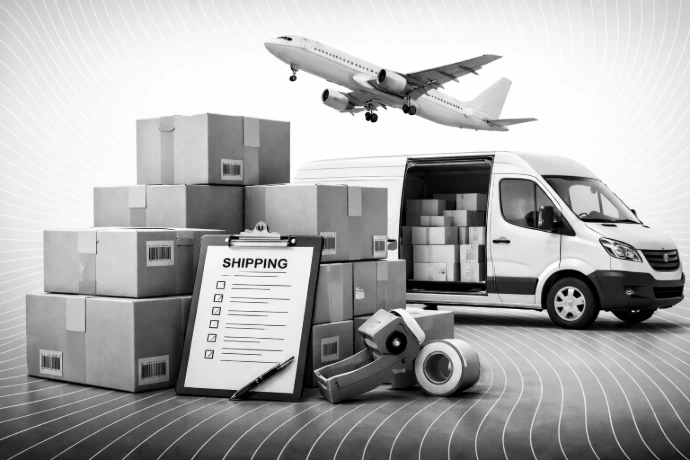
What courier service is (in plain terms)
Couriers move documents and small parcels through a parcel network designed for standardised handling: parcels are collected, scanned through hubs, and delivered via last-mile drivers. Couriers are often the simplest option when a shipment can travel as one or a few well-packed pieces with clear dimensions and declared contents.
Sterdts coordinates courier shipments as part of a broader logistics toolkit. The goal is not “courier at all costs” — it’s choosing the method that matches the parcel, the deadline, and the risk.
When couriers make sense vs freight
Couriers are usually a good fit when:
Documents (originals, signed paperwork, visa packs, tender docs)
Small, time-sensitive parts or samples (a carton or two)
You can provide exact dimensions and weight
You need door-to-door tracking and fast handover
Freight is usually a better fit when:
The shipment is multiple cartons, bulky, or pallet-sized (see road-freight)
The shipment is urgent but heavy/oversized, or needs more controlled handling (see air-freight)
The shipment involves complex cross-border commercial documentation beyond a simple parcel flow (see customs-clearing and regulations)
Cost predictability matters more than speed, especially where volumetric weight makes courier pricing spike
A practical tipping point: volumetric weight
Courier pricing often uses volumetric weight (the space the parcel occupies), not only actual kilograms. A lightweight but bulky carton can price like a much heavier item. If your parcel is “big for its weight,” courier can become expensive quickly — and road freight or air freight may be the more rational choice.
How courier shipments typically work
Courier movements are straightforward when the inputs are correct:
Collection is arranged (or you drop off, depending on the option).
The parcel moves through scan points (pickup, hub, linehaul, destination hub).
Delivery is attempted at the destination.
If delivery fails (receiver unavailable, address issue), the parcel may be held for re-attempt, redirected, or returned based on carrier rules and instructions.
Tracking is usually “event-based” — you’ll see updates when the parcel is scanned, not continuous location tracking.
What we need to quote
If you send the information below in one message, you’ll get a faster, cleaner quote and fewer post-collection adjustments.
Example:
Address, suburb, hours, contact name + phone
Why it matters:
Prevents failed collection and misroutes
Example:
Receiver name, phone, delivery hours, access notes
Why it matters:
Reduces failed delivery attempts / holds
Example:
“Spare parts (non-hazardous)” / “Original documents”
Why it matters:
Drives acceptance rules + customs description
Example:
1 envelope / 2 cartons
Why it matters:
Labels, handling, routing accuracy
Example:
L×W×H in cm (each carton)
Why it matters:
Determines volumetric weight and price
Example:
kg per carton
Why it matters:
Determines pricing and handling
Example:
Envelope, carton, tube; sealed yes/no
Why it matters:
Predicts damage risk and acceptance
Example:
“Must arrive by Friday”
Why it matters:
Correct service choice (courier vs freight)
Example:
Signature required, no weekend delivery, appointment site
Why it matters:
Prevents delivery failure and reattempt delays
Example:
ZAR value + currency
Why it matters:
Affects liability/insurance options + customs
Example:
Description, value, reason (sale/sample/repair/return)
Why it matters:
Avoids customs queries and clearance delays
If you’re unsure about dimensions, measure before collection. Small differences can materially change the price.
Common courier pitfalls (and how to avoid them)
International courier: small parcel still follows rules
International courier shipments can still be subject to customs requirements and documentary checks. Even for small goods, you typically need:
2
A reason for export/import (sale, sample, repair/return, personal effects)
If your shipment is commercial and you’re unsure what applies, start with regulations and reach out via contactus. If it’s likely to need deeper coordination, see customs-clearing.
For common questions customers ask before sending anything, see faq.