Notice: Please note that this page is still being refined. The content is current, but the layout and styling may not yet match the rest of the site.
Road freight.
Planned road deliveries with clear constraints — access, timing windows, and cargo handling defined upfront.
Road freight, planned like an on-site handover
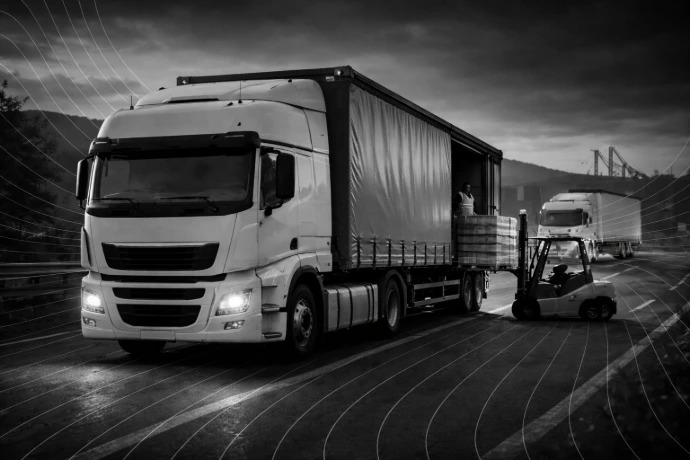
On road freight, most delays don’t come from “the road” — they come from the last 200 metres: a gate that can’t take the vehicle, a bay that needs a booked slot, or a receiver who expected the driver to offload. A good road plan makes the handover predictable by agreeing the constraints before anything is booked.
Sterdts coordinates road freight by confirming three things early:
Access:
what vehicle can physically reach collection and delivery points (turning space, height limits, bay layout, security rules).
Scheduling:
the delivery window and any appointment/booking procedure (including who must book it and what reference is required).
Handling:
who loads and who offloads, and what equipment is available at each end (forklift, dock, tail-lift, crane, labour).
When road vs sea/air makes sense
Road freight is usually the best fit when the movement is door-to-door within South Africa, when site access and delivery windows matter, or when you need multi-drop sequencing with clear handovers.
Couriers can be a better fit when the shipment is parcel-style and doesn’t require freight-type planning (bays, equipment, restraints, or site-specific access constraints).
Couriers → couriers
Quick guide: picking the main mode
Typical road freight patterns we can plan around
Dedicated vehicle (direct):
one pickup, one delivery, minimal handoffs (useful for tight windows or sensitive handling).
Part-load / consolidated:
shared capacity where timing can be more flexible and access is straightforward.
Multi-drop distribution:
sequenced stops planned against receiver windows and site rules.
Special handling moves:
cargo with strict limits (non-stack, upright-only, fragile, top-load) or packaging that changes handling time and restraint needs.
If you’re not sure which pattern fits, start by sharing the access constraints and the loading/offloading method — those often decide the vehicle class.
What we need to quote (route, cargo, constraints)
A road quote is only as solid as the inputs. The table below lists the core details we need to price and plan without guessing.
Why we ask:
Confirms route and last-mile access
Risk if missing:
Wrong vehicle or failed access
Why we ask:
Aligns to site availability/booking
Risk if missing:
Waiting, rebooking, missed slot
Why we ask:
Confirms feasibility at gate/bay
Risk if missing:
Vehicle cannot enter or reach bay
Why we ask:
Sets handling and restraint approach
Risk if missing:
Handling disputes or assumptions
Why we ask:
Confirms capacity and load plan
Risk if missing:
Re-quote or incorrect vehicle
Why we ask:
Confirms how cargo will be loaded
Risk if missing:
Delays or extra handling required
Why we ask:
Confirms how cargo will be received
Risk if missing:
Waiting or failed delivery attempt
Why we ask:
Plans compliance (non-stack/upright/top-load)
Risk if missing:
Non-compliant handover at site
Why we ask:
Aligns to legal handling requirements
Risk if missing:
Refusal at collection; compliance risk
Why we ask:
Enables live gate/bay coordination
Risk if missing:
Missed handover; wasted time
Why we ask:
Aligns close-out expectations
Risk if missing:
POD disputes after delivery
Road handover checklist (site-ready, vehicle-ready)
Pickup (shipper side)
☐ Cargo packed, labelled, and accessible at the agreed point
☐ Loading method confirmed and equipment available on the day
☐ Pickup contact can authorise access and answer driver calls
☐ Handling limits flagged (non-stack, upright-only, top-load, fragile)
Delivery (receiver side)
☐ Delivery slot/window confirmed (and booking completed if required)
☐ Offload method confirmed and equipment available (dock/forklift/tail-lift/crane)
☐ Access constraints confirmed (height, turning space, security/queue rules)
☐ POD signer confirmed (and any stamps/photos/documents required)
Exception path (if the site is not ready)
☐ Who to call is agreed, and escalation authority is clear
☐ Decision options are defined (wait, rebook, return, alternate offload)
☐ Site rules that change timing are shared (PPE, induction, escort, access codes)
Common cross-border road freight routes from South Africa

South Africa to DRC
A key regional road freight route where planning usually depends on cargo readiness, border coordination, vehicle suitability, and clear delivery arrangements at destination. The smoother moves are usually the ones where loading details, paperwork, route expectations, and final handover requirements are confirmed early.

South Africa to Zimbabwe
A common cross-border road freight route where timing, border coordination, and final delivery readiness all need to work together. Clear loading details, paperwork, and receiving arrangements usually make the biggest difference to a smooth movement.

South Africa to Mozambique
Often used where cargo planning depends on access, handover timing, and border-related coordination. Good results usually come from confirming site constraints, vehicle requirements, and delivery scope early in the process.

South Africa to Namibia
A practical regional route where clear cargo details, realistic scheduling, and confirmed receiving arrangements help avoid unnecessary delays. The smoother moves are usually the ones where handover expectations are agreed before dispatch.
What happens next
Scope and constraint check
route, access, windows, and responsibilities confirmed.
Vehicle and execution plan
capacity and access fit confirmed; timing built around site rules.
Quote issued
inputs reflected; assumptions stated where something is not yet confirmed.
Booking and coordination
contacts validated and any required slot booked.
Collection, delivery, close-out
handovers managed and POD shared to your requirement.
What typically changes cost or timing
Most changes trace back to constraints that differ from the original plan:
Cargo reality differs after packing (piece count, dimensions, weight, packaging).
Equipment isn’t available when expected (forklift busy/down, crane not booked, dock occupied).
Route realities appear late (roadworks, permitted-route requirements for abnormal loads, holiday congestion, toll-route preferences).
Related Services.
Warehousing
Sea freight
Air freight
Couriers
Customs coordination
Plan your road delivery
Send your route, cargo details, and site access notes. We’ll map the constraints first, then price the movement that fits them.