Notice: Please note that this page is still being refined. The content is current, but the layout and styling may not yet match the rest of the site.
Customs clearing.
Clear steps, correct documents, realistic timelines — so cargo doesn’t stall unnecessarily.
Get clearing advice →
What customs clearing is
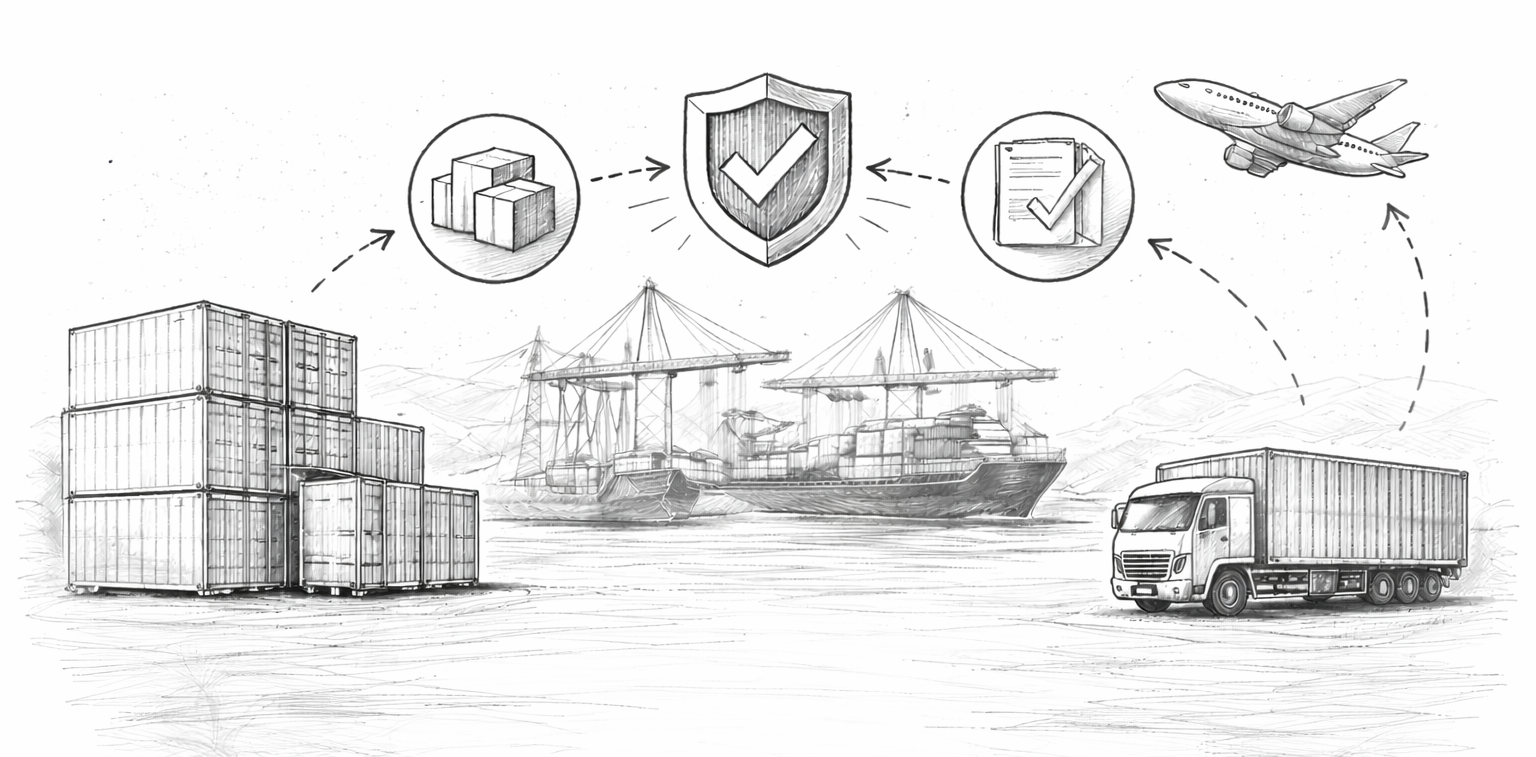
Customs clearing is the process of preparing and submitting the required declaration for goods moving into or out of South Africa, supported by documents that explain what the goods are, what they’re worth, and what the shipment includes. When information is missing or inconsistent, customs may request clarification, apply additional checks, or inspect cargo.
Clearing is most reliable when it starts early — before arrival at a port, airport, or border — while there is still time to correct gaps without urgent storage pressure.
This page is practical guidance for planning and preparation. It’s not legal advice, and we don’t promise outcomes that depend on third parties.
Where it fits (sea, air, and road)
Customs clearing is not a single “final step.” It connects to the timing and handovers of the transport mode:
Road freight: border sequencing and correct paperwork affect timing and handover risk. See road-freight.
For definitions and South Africa-specific reference context you may need during planning, see regulations.
What causes holds (plain language)
Most delays aren’t caused by “one big problem.” They usually come from small mismatches that create uncertainty. The most common triggers are:
What to prepare (documents + inputs)
Not every shipment needs every item, but when something is required, missing or inconsistent information is a common cause of holds. Keep documents simple, consistent, and specific.If you’re unsure what applies, share your draft pack early. It’s easier to close gaps before arrival than under time pressure.
Why it is needed:
Confirms contents, quantities, weights, packaging
When it's required:
Most shipments
Common risk if completed:
Inspection delays; mismatch queries
Why it is needed:
Supports origin checks and any claims
When it's required:
Often
Common risk if completed:
Claim rejected; extra queries
Why it is needed:
Required for controlled/restricted goods
When it's required:
Only for certain goods
Common risk if completed:
Process stops until provided
Why it is needed:
Can affect declared value depending on terms
When it's required:
When relevant
Common risk if completed:
Value adjustments; rework
Why it is needed:
Supports correct HS code and reduces ambiguity
When it's required:
Always
Common risk if completed:
HS uncertainty; additional questions
Why it is needed:
Confirms seller/buyer, item descriptions, values, currency
When it's required:
Most commercial shipments
Common risk if completed:
Value/classification queries; rework
Why it is needed:
Links cargo to the movement record
When it's required:
Always
Common risk if completed:
Cannot align file; clearance stalls
Why it is needed:
Guides duty/VAT treatment and checks for restrictions
When it's required:
Always (at least a proposal)
Common risk if completed:
Wrong treatment; hold risk
Why it is needed:
Clarifies what costs belong in the declared value
When it's required:
Always
Common risk if completed:
Value disputes; avoidable delays
What we need to quote / assess (HS code, docs, values, scope)
To scope clearing realistically, we assess four areas up front: HS code, documents, values, and scope.
HS code / classification
What we need from you: What the goods are, what they’re made of, what they’re used for, model numbers/photos if needed
Documents
What we need from you: Draft invoice + packing list + transport details, and confirmation they match (descriptions/qty/weights)
Values
What we need from you: Declared values, currency, Incoterms, and clarity on what’s included (goods only vs goods + freight/insurance)
Scope
What we need from you: Import/export/transit, mode (sea/air/road), port/border point, and whether delivery is part of the plan
If you only have partial information, that’s fine — we’ll tell you what’s missing and what looks most likely to create delay risks
Common hold reasons + how to reduce risk
Below are the most frequent causes of avoidable delays, with simple ways to lower risk.The objective is not “no checks.” The objective is fast resolution when checks happen.
Invoice and packing list don’t match
Reduce risk: use the same item descriptions across all documents and make sure quantities and weights reconcile.
Generic descriptions that don’t support HS code
Reduce risk: add specifics (material, function, model, use-case). “What is it?” is not enough — “what exactly is it?” matters
Incoterms unclear or inconsistent
Reduce risk: confirm Incoterms early and make sure the commercial paperwork reflects the same terms.
Values that raise questions
Reduce risk: keep the commercial story consistent (quote → invoice → payment evidence where relevant) and avoid last-minute changes without updating paperwork.
Controlled goods discovered late
Reduce risk: flag the category early, especially for chemicals, medical/food-related items, electronics with radio features, branded goods, or anything regulated.
Inspection occurs
Reduce risk: accurate packing lists, clear carton marking, and documents that match the physical cargo reduce how long inspections take.
What happens next
You share your draft pack (even if incomplete): invoice/packing list/transport details + product description + Incoterms.
We confirm scope and risk items (HS code, values, permits, timing constraints) and request any missing inputs.
We align the clearance pack so descriptions, quantities, weights, and values tell one consistent story.
Declaration is prepared and submitted when the file is ready and milestones allow.
Queries/inspections are handled: we tell you what is being asked and what’s needed to respond.
Release and handover planning: once released, we coordinate the next operational step with your shipment plan.